

Someone is doing karaoke. Badly. Not charming-bad — actually bad. They’ve picked a song two octaves above their range and they’re committed, eyes closed, hand on chest, and you can see the exact moment they realize the chorus is coming and they’ve already burned through their good notes. You are not singing. You don’t know this person. You will never see them again. And yet your shoulders have crawled up to your ears, your face is hot, and you’re suddenly very interested in your drink.
Or: a guy on a dating show says “I think I’m falling for you” on day two. A coworker tells a joke at the all-hands and nobody laughs and he says “tough crowd!” into the silence. A stranger waves back at someone who wasn’t waving at them. You feel it. In your body. Like you were the one waving.

Why. You did nothing. You are an innocent bystander to this karaoke crime. And still, somehow, you’re the one who needs to leave the room.
Here’s the thing. Your brain doesn’t really have a clean border between you and other people. When you watch someone do something, the same regions that would fire if you were doing it light up — quietly, in the background, running a little simulation. It’s how you understand other humans at all. You don’t analyze them like a spreadsheet. You briefly become them.
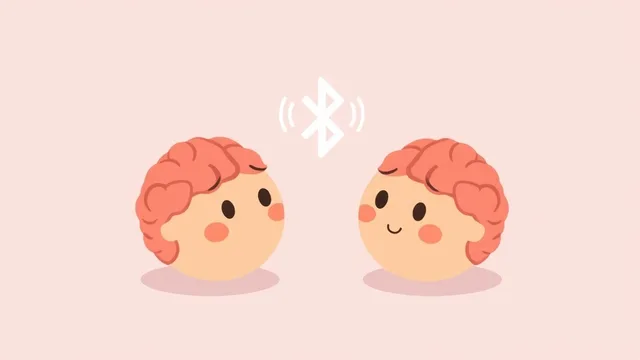
Think of it like Bluetooth pairing. Your brain auto-connects to whoever’s nearby and starts mirroring their signal. Usually this is great — it’s how you laugh when friends laugh, wince when someone stubs their toe, cry at movies about dogs. But when the signal coming through is humiliation, your brain pairs with that too. It doesn’t ask for permission. It just installs it.
So the karaoke guy hits the wrong note, and somewhere in your nervous system a tiny voice goes: that was us. We did that. Abort. That’s why you physically look away from the screen. Not because you want to — because some part of you thinks hiding will undo it.

The technical term is vicarious embarrassment, but “emotional Bluetooth” is closer to the truth. And here’s the part that’s actually kind of beautiful: you only feel it for people whose dignity you, on some level, care about protecting. People with low empathy don’t get secondhand cringe. They watch the karaoke guy and feel nothing.
So the next time your shoulders climb to your ears because a stranger on the internet tucked their shirt into their underwear, you’re not being weird. You’re being a person whose wiring works. The karaoke guy will never know you suffered with him through the bridge. But you did. Quietly, from across the bar, you carried a little of it for him.
That’s not a glitch. That’s the whole job.