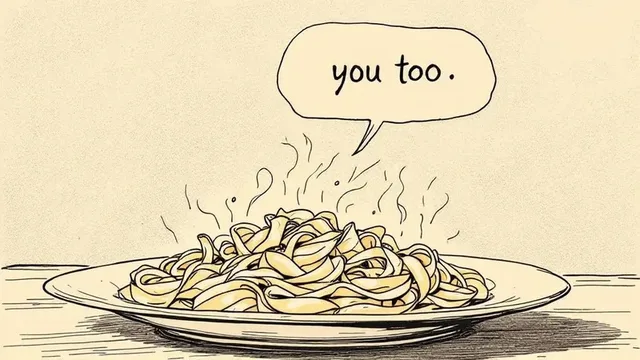
The waiter sets down your pasta, smiles, and says "Enjoy your meal." You make eye contact. You smile back. And from your mouth, with the confidence of a man who knows exactly what he's doing, comes the phrase: "You too."
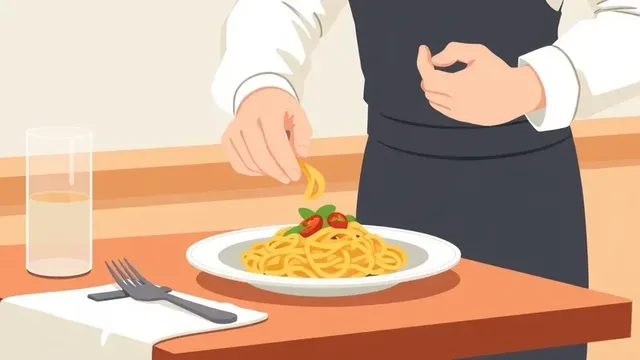
You freeze. He freezes. Somewhere in the kitchen, a clock ticks louder than usual. He doesn't have a meal. He's working. He's going to spend the next four hours carrying plates of carbonara to other people who will also tell him to enjoy his meal. You consider faking your own death. Instead, you reach for the pepper grinder like it personally wronged you and pretend the last three seconds didn't happen. Your dining companion has clocked the whole thing and will be bringing it up at weddings for the rest of your natural life. The pasta, by the way, is excellent. You will not remember this. You will only remember saying "you too" to a man holding a pepper mill.
Your brain wasn't malfunctioning. It was doing exactly what it's designed to do, which is be lazy in a very specific, very efficient way. Most of life is reruns. "How are you?" "Good, you?" "Have a nice weekend." "You too." These aren't conversations, they're handshakes made of words. Your brain has filed them under "social pleasantries — autopilot enabled" and stopped listening to the actual content years ago.
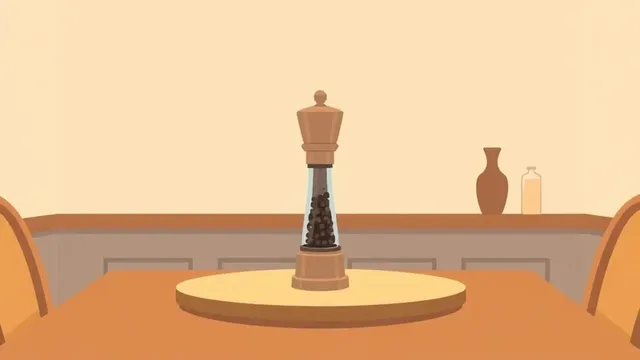
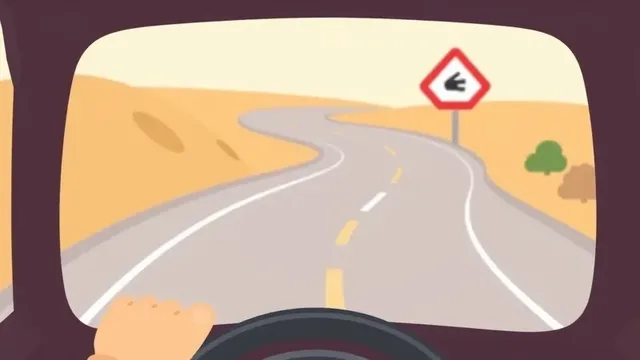
Think of it like driving home. You've done the route a thousand times. You're not really steering — you're singing along to the radio while some background process in your skull handles the turns. Then one day there's a detour sign, and you sail right past it because the autopilot doesn't read signs, it reads patterns. "Enjoy your meal" matches the pattern of "have a nice day" closely enough that your brain swings the steering wheel toward "you too" before the conscious part of you even finishes chewing. By the time you realize the script doesn't fit, the words are already out, waving cheerfully at a confused waiter.
So the next time it happens — and it will happen again, probably this week — give yourself a tiny break. Saying "you too" to a waiter isn't a sign that you're socially broken or secretly stupid. It's a sign that your brain is so good at handling small talk it can do it with its eyes closed. The trade-off for that smooth, effortless small talk is the occasional, gloriously stupid misfire. And honestly? The waiter has heard it nine times today. You're not the main character of his shift. You're just another autopilot brain wishing him a nice pasta.